If you are searching how to remove tartar from teeth without a dentist, the most important thing to know is that hardened tartar generally cannot be safely removed at home.
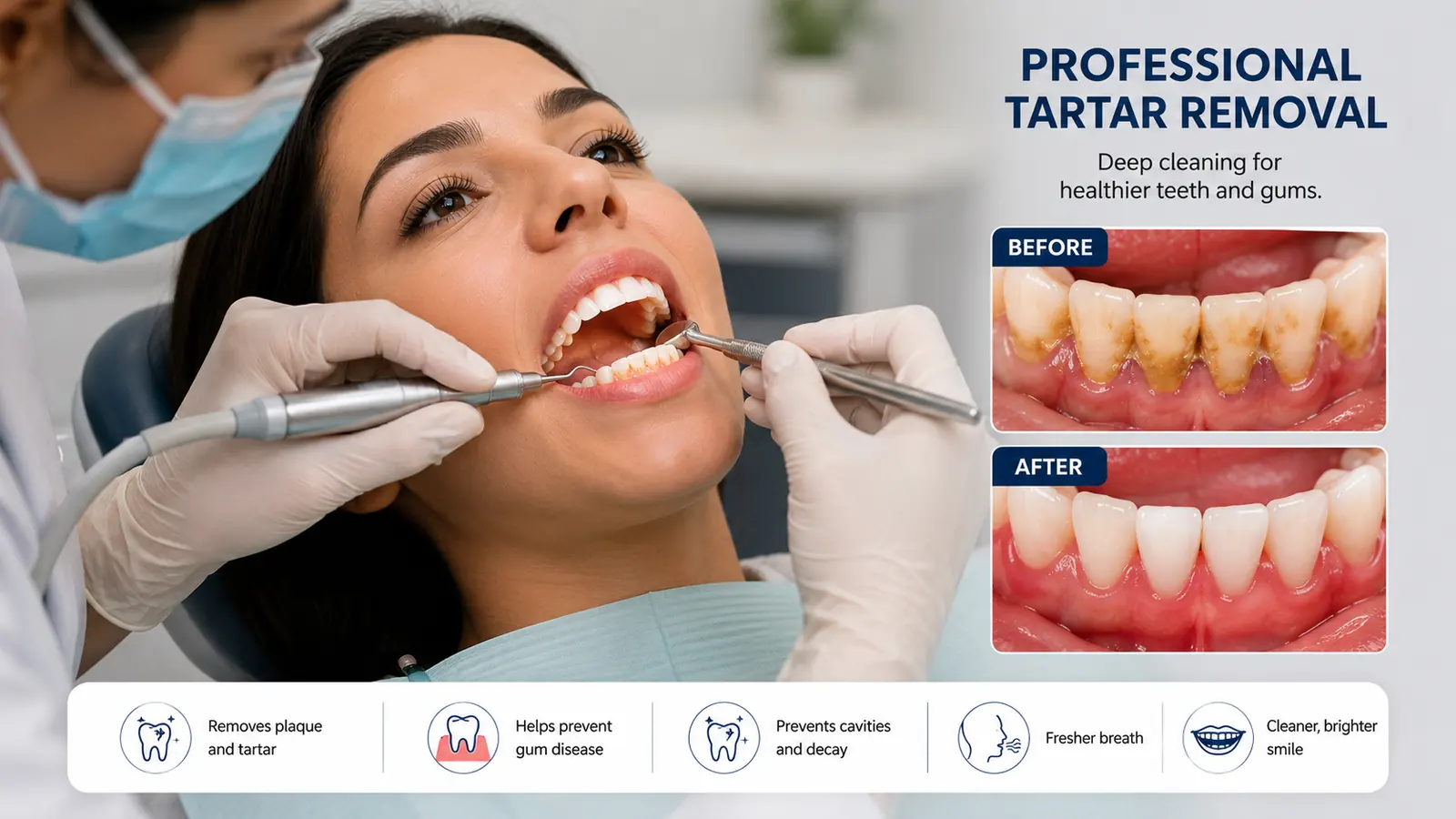
You can remove soft plaque with good brushing and interdental cleaning, but once plaque mineralises into tartar, or dental calculus, it becomes firmly attached to the tooth surface. A dentist or dental hygienist usually needs to remove it with professional instruments. Cleveland Clinic similarly states that tartar cannot be removed with normal brushing and flossing alone.
Is It Plaque or Tartar?
Plaque and tartar are related, but they are not the same thing.
Plaque is a soft bacterial biofilm that forms on teeth every day. If plaque remains on the teeth, minerals in saliva can cause it to harden into tartar. Once that happens, normal brushing no longer removes it reliably.
| Plaque | Tartar |
|---|---|
| Soft or sticky biofilm | Hardened mineralised deposit |
| May be difficult to see | Often white, yellow, brown or dark |
| Can be removed with effective daily cleaning | Cannot reliably be brushed or flossed away |
| Daily removal helps prevent tartar | Usually needs professional scaling |
This distinction matters because some people try aggressive home treatments for what is actually a stain, plaque or tartar.
Can You Remove Tartar From Teeth Without a Dentist?
Once tartar is established, there is no reliable home method that safely dissolves or scrapes it away.
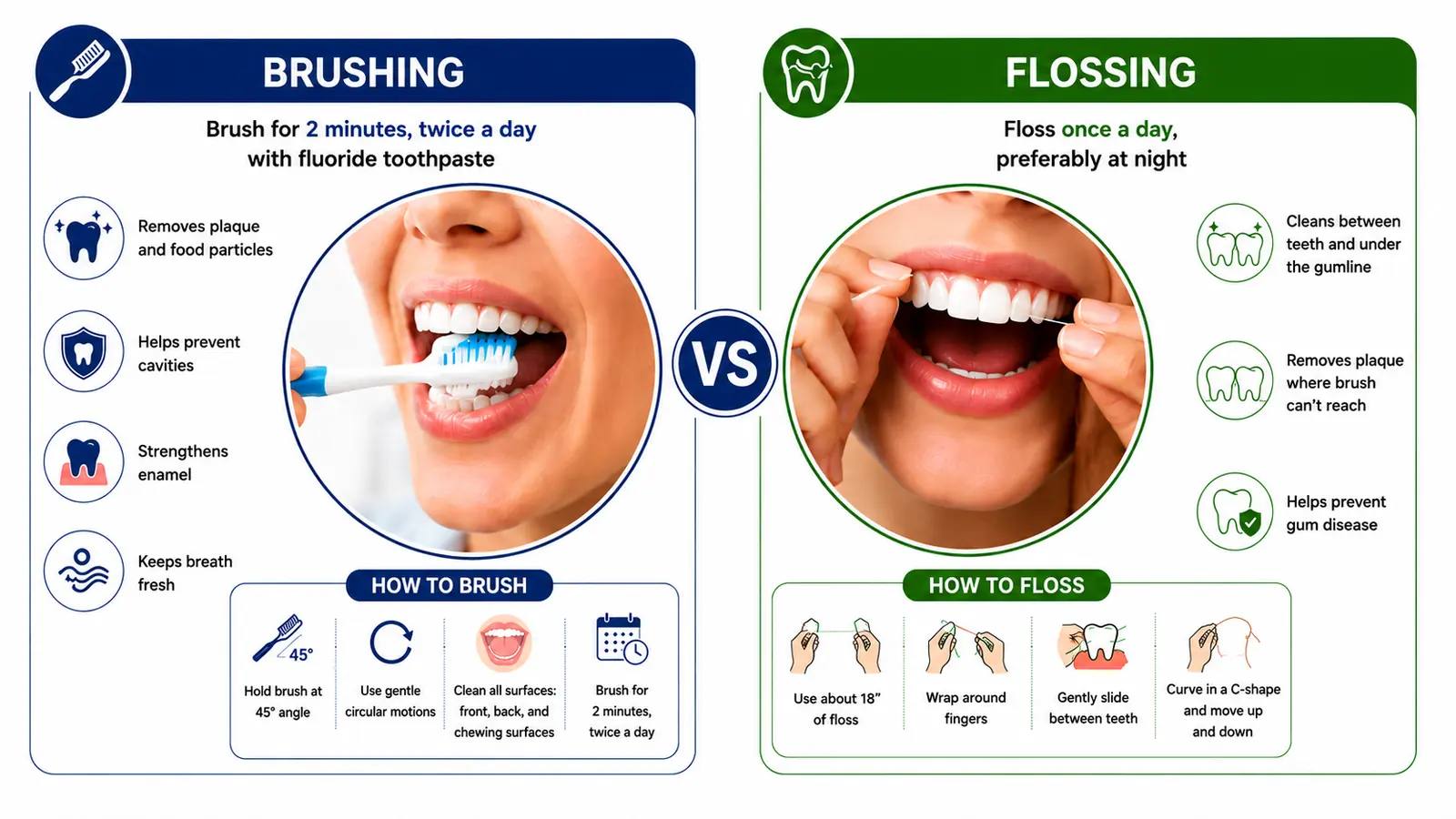
The safest approach at home is to prevent the deposit from getting worse:
- Brush twice daily with fluoride toothpaste (our dentist-recommended toothpaste guide can help you choose one).
- Clean between the teeth every day.
- Pay attention to the gumline and crowded areas.
- Avoid tobacco.
- Limit frequent sugary foods and drinks.
- Attend dental examinations according to your individual needs.
The ADA notes that once plaque has hardened into tartar, it can only be removed through cleaning performed by a dental professional.
Tartar Home Remedies: What Actually Works?
Many online remedies promise to remove tartar naturally, but most either do not remove hardened calculus or may damage the teeth and gums.
| Method | Removes hardened tartar? | What to know |
|---|---|---|
| Brushing | No | Removes plaque and helps prevent new tartar |
| Floss/interdental cleaning | No | Removes plaque between teeth |
| Baking soda | No | May help with some surface staining but is not a tartar treatment |
| Lemon juice | No | Acid can contribute to enamel erosion |
| Vinegar | No | Acidic and not a safe calculus-removal method |
| Charcoal | No | Does not reliably remove tartar |
| DIY metal scraper | No safe home use | Can injure gums or tooth surfaces |
| Professional scaling | Yes | Standard approach for established tartar |
Does Baking Soda Remove Tartar?
No. Baking soda may help remove some superficial staining and plaque, but it does not reliably remove hardened calculus.
It should also not replace fluoride toothpaste for daily brushing.
Can Lemon or Vinegar Dissolve Tartar?
Using acids such as lemon juice or vinegar is not a safe tartar-removal strategy.
Even if an acid changes the appearance of surface deposits, repeated acid exposure can soften and erode enamel. Damaged enamel does not grow back once substantial tooth structure has been lost.
Does Charcoal Toothpaste Remove Tartar?
Charcoal products may change the appearance of some surface stains, but they do not remove established calculus.
If you are considering a whitening or charcoal toothpaste, it is more useful to first determine whether the visible deposit is stain, tartar or something else.
Can I Scrape Tartar Off Myself?
Do not use dental scalers, pins, blades or other sharp tools to scrape tartar at home.
It is easy to injure the gums, scratch tooth surfaces or miss deposits below the gumline. Professional scaling uses instruments with controlled technique and appropriate visibility.
How Can You Tell If Tartar Needs Professional Cleaning?
A hard deposit that does not come away with normal brushing is more likely to require professional assessment.
Possible signs include:
- Hard yellow or brown buildup near the gumline
- Dark deposits around or between teeth
- Rough areas that remain after brushing
- Persistent bad breath associated with plaque buildup
- Gums that repeatedly bleed or appear swollen
- Visible buildup behind the lower front teeth
- Tartar around braces or crowded teeth
Do not diagnose gum disease from tartar alone. Bleeding, swelling or recession may require a broader periodontal assessment rather than simply a routine cleaning. To understand when a gum specialist may be involved, read what is a periodontist.
Hard buildup that will not brush away?
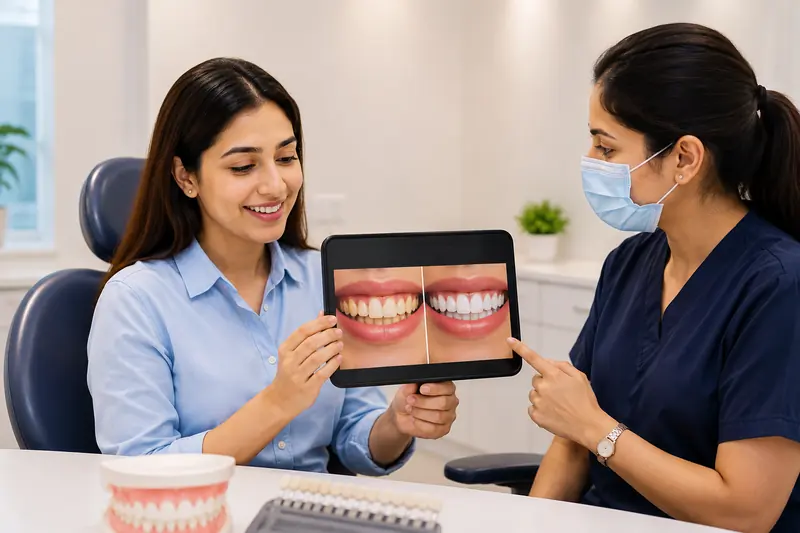
Book a dental assessment at Little Bites Clinic, Sector 29, Faridabad — we can check whether it is tartar, staining or something else.
WhatsApp UsHow Does a Dentist Remove Tartar?
Dentists remove calculus using professional scaling instruments.
Depending on the amount and location of deposits, cleaning may involve ultrasonic instruments, hand scalers and polishing where appropriate. You can read more about what this involves in our guide to professional teeth cleaning in Faridabad.
Routine teeth cleaning is different from scaling and root planing, sometimes called deep cleaning. Deep cleaning is generally used when periodontitis involves deposits and disease below the gumline rather than simply visible tartar on otherwise healthy teeth. Our guide to deep cleaning and root planing explains the difference in more detail.
This is why bleeding gums should not automatically lead to the assumption that everyone needs deep cleaning.
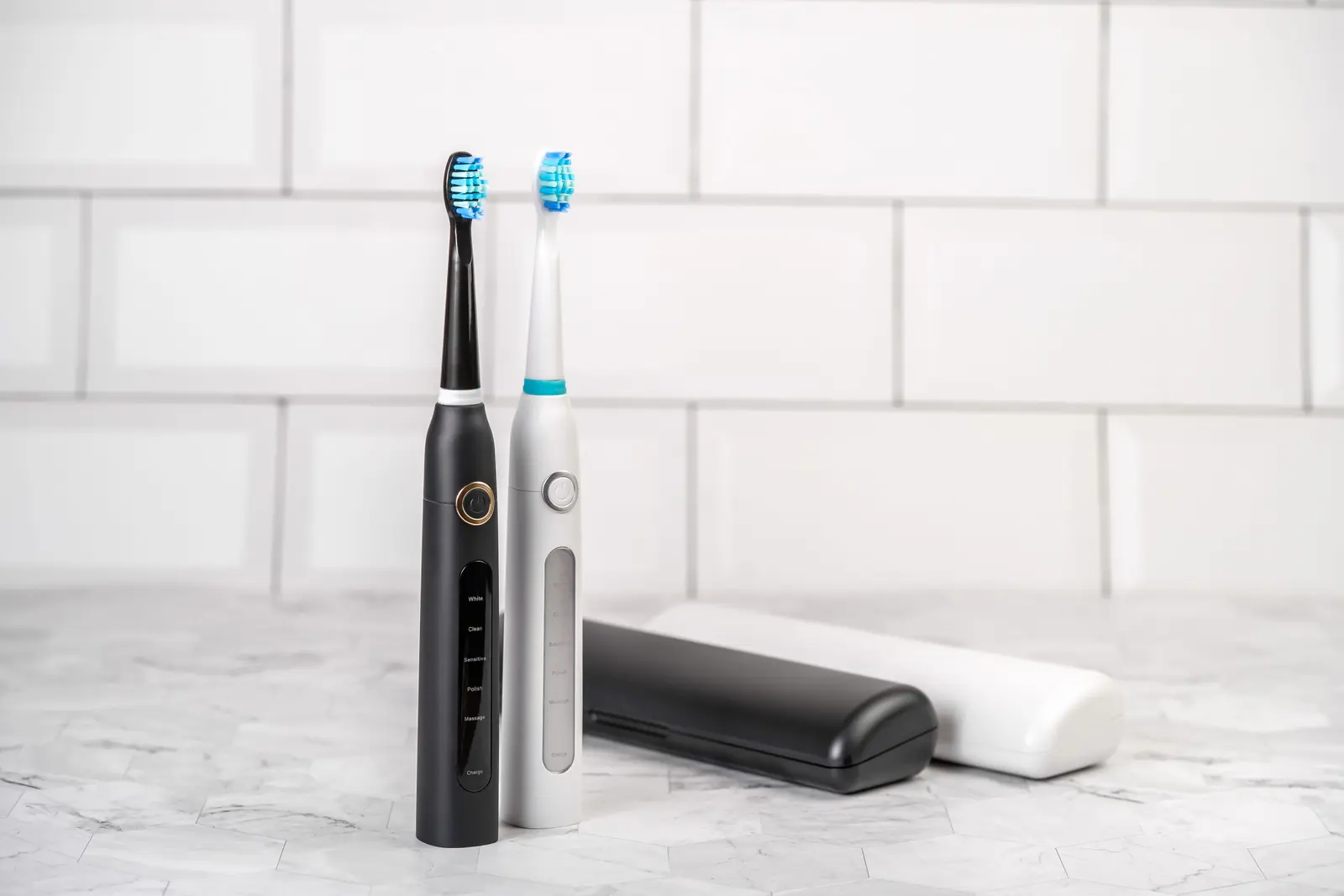
Can an Electric Toothbrush Remove Tartar?
No. An electric toothbrush cannot reliably remove calculus after it has hardened.
Its value is in better daily plaque control for some people, which may reduce the plaque available to mineralise over time.
Both manual and powered brushes can be effective when used correctly. If you use an electric toothbrush, focus on soft bristles, gentle pressure, adequate brushing time and correct technique rather than expecting it to act like a dental scaler. Little Bites' current best electric toothbrush guide 2026 also makes this distinction.
How Do You Remove Tartar From a Toddler's Teeth?
Do not scrape tartar from a toddler's teeth at home.
A hard yellow, brown or dark area in a child's mouth may be tartar, but it can also be staining, plaque or another dental change. Continue gentle twice-daily brushing with an age-appropriate amount of fluoride toothpaste and arrange a dental assessment if the deposit remains.
A pediatric dentist can determine whether professional cleaning is necessary and check why buildup is developing.
Trying to use metal instruments inside a young child's mouth carries an additional risk of accidental injury if the child suddenly moves.
How Can You Prevent Tartar From Coming Back?
Prevention focuses on removing plaque before it mineralises.
Brush twice daily with fluoride toothpaste and clean between your teeth once daily with floss or another suitable interdental cleaner. Wondering how often you should floss? Our guide covers it. The ADA notes that toothbrush bristles cannot effectively clean every tight interdental space, so daily interdental cleaning complements brushing.
If tartar repeatedly builds up despite good home care, ask your dentist to check for areas that are difficult to clean, including crowded teeth, braces, bridges, gum recession or periodontal problems.
A mouthrinse may sometimes be recommended for specific needs, but it does not remove existing tartar and should not replace brushing or interdental cleaning.
How Often Should Tartar Be Professionally Removed?
There is no single cleaning interval that is ideal for every patient.
Someone with little plaque accumulation and healthy gums may have different recall needs from a patient with periodontitis, braces, heavy calculus buildup or other risk factors.
Your dentist can recommend a suitable interval after assessing your gum health, plaque and calculus accumulation and overall oral-health risk.
Expert Insight
— Dr. Nikitaa Dhingra Sanan, Little Bites Dental Clinic, Faridabad
Conclusion
If you are searching how to remove tartar from teeth without a dentist, the safest answer is that established tartar generally cannot be removed reliably at home.
Home care is still extremely important because brushing with fluoride toothpaste and daily interdental cleaning can remove plaque and help prevent additional calculus from forming.
Avoid acidic remedies, aggressive scrubbing and DIY scraping tools. If a hard deposit remains after normal brushing, a dental examination can determine whether it is tartar, staining or another problem and whether routine scaling or periodontal treatment is appropriate.
If you have hard buildup that will not brush away, bleeding gums or recurring tartar, a dental assessment can help determine whether you need routine cleaning or more detailed gum evaluation.
Patients in Faridabad and Delhi NCR can visit Little Bites Dental Clinic for assessment of plaque, tartar and gum health.
References
- Cleveland Clinic — Tartar (Dental Calculus)
- American Dental Association — Dental Floss/Interdental Cleaners
- American Dental Association — Home Oral Care
- ADA MouthHealthy — Scaling and Root Planing (periodontal guidance on professional calculus removal)