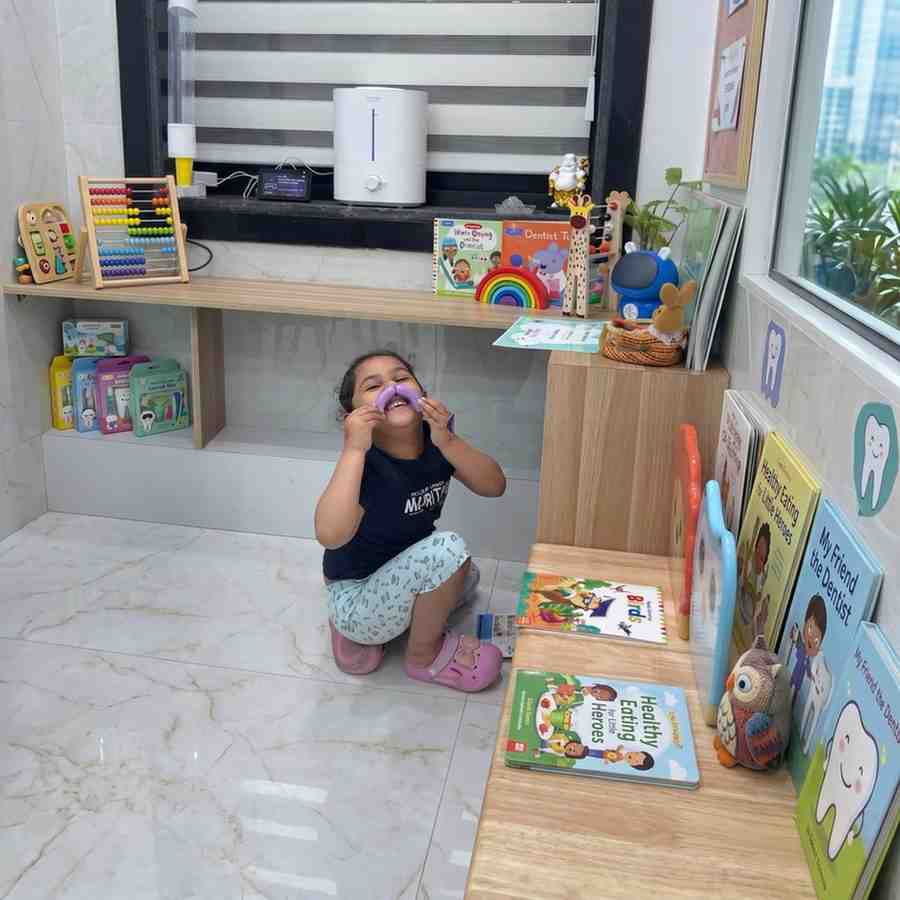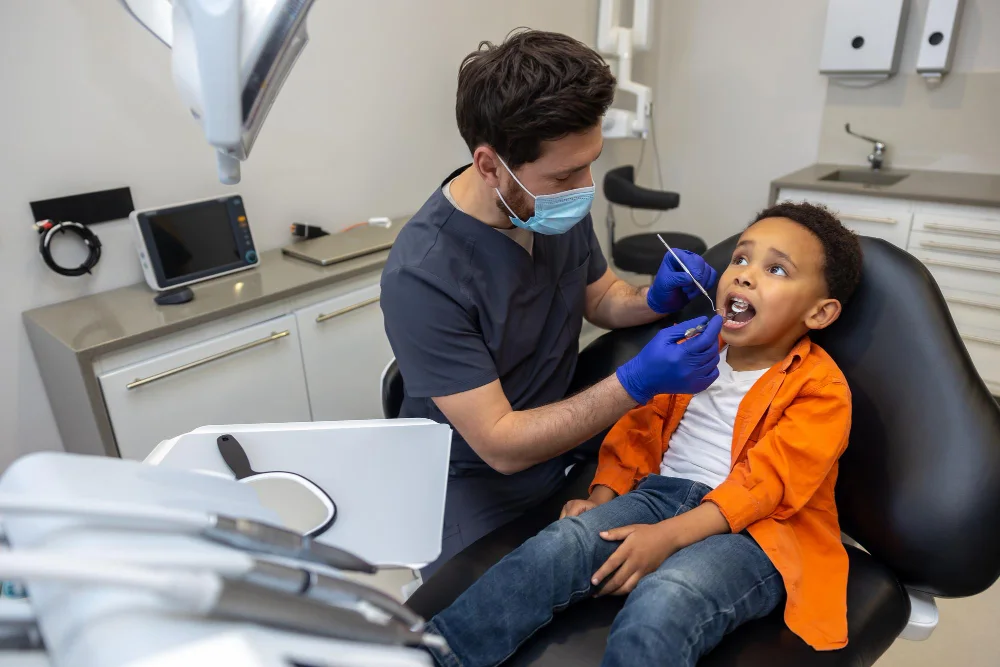
If your child cries, refuses to open their mouth, moves in the dental chair or will not allow treatment, do not panic or blame them. Dental cooperation is a skill that many children develop gradually.
The best next step is to identify why your child is struggling and choose an approach suited to their age, anxiety level, dental condition and treatment needs.
At Little Bites Dental Clinic in Faridabad, parents often ask, "What should I do if my child is not cooperative for dental treatment?" This guide explains what parents can do before, during and after the appointment - and when behaviour guidance, sedation or hospital-based care may be considered.
Why Is My Child Not Cooperating at the Dentist?
A child who appears "uncooperative" is often communicating fear, discomfort, confusion or loss of control.
- Fear of pain, injections or dental instruments
- A previous difficult medical or dental experience
- Sensitivity to sounds, lights, tastes or touch
- Separation anxiety
- Being tired or hungry
- Difficulty understanding instructions
- An active toothache
- A long or complex procedure
- Developmental, sensory or communication differences
- Anxiety picked up from parents, siblings or online videos
Very young children may simply lack the emotional maturity needed to remain still for treatment. This is not bad behaviour.
What Does “Pre-Cooperative Child” Mean in Dentistry?
In pediatric dentistry, a pre-cooperative child is generally a young child who has not yet developed the communication, emotional or cognitive skills needed to consistently cooperate with dental treatment.
Being pre-cooperative does not mean that a child is naughty or deliberately refusing care. Very young children may find it difficult to understand instructions, remain still for long periods, tolerate unfamiliar sensations or manage fear in a dental setting.
A child's ability to cooperate can also be influenced by anxiety, pain, previous medical or dental experiences, sensory sensitivities, communication differences and the complexity of the procedure.
For a pre-cooperative child, a pediatric dentist may use short familiarisation visits, Tell-Show-Do, distraction, positive reinforcement, gradual desensitisation or other age-appropriate behaviour-guidance techniques. The treatment plan should be based on the child's individual needs and the urgency of the dental problem.
AAPD guidance supports individualized behaviour guidance based on development, temperament, treatment need, previous behaviour and pain.
What Should Parents Do Before the Dental Appointment?
1. Tell the Clinic About Your Child's Concerns
Before the visit, tell the dental team if your child is frightened of doctors or injections, had a difficult previous appointment, has sensory sensitivities, has autism or ADHD, takes regular medicines, has a medical condition, or has severe tooth pain or swelling.
This information allows the dentist to plan the appointment, communication style and treatment sequence.
2. Use Simple, Positive Language
Tell your child that the dentist will count their teeth, check their smile, take pictures if needed, clean or repair a tooth, and help the tooth feel better. Avoid detailed descriptions of needles, drilling or pain.
Do not say: "It won't hurt," "The dentist will give you an injection," "Be brave or the dentist will pull your tooth," or "If you cry, we are leaving." Even well-meant phrases can introduce frightening ideas or make the child feel that their emotions are wrong.
3. Avoid Sharing Your Own Dental Fear
Children notice a parent's words, facial expressions and body language. Try not to discuss painful dental memories, your fear of injections, difficult extractions, stories about other children crying, or threats involving the dentist.
4. Practise Through Play
Use a toothbrush, mirror and soft toy to practise a dental visit at home. Ask the toy to sit back, count its teeth, shine a small light near its mouth, praise the toy for opening, and let your child practise taking turns.
Pretend play can help children rehearse unfamiliar experiences in a safe environment.
5. Choose the Appointment Time Carefully
Whenever possible, schedule the visit when your child is awake, well rested, recently fed according to clinic instructions, least irritable, and not rushing between school or activities. For many younger children, morning appointments work better than late-evening visits.
If sedation is being considered, follow the clinic's fasting and medication instructions exactly rather than applying normal meal advice.
Is your child anxious about dental treatment?
Book a pediatric dental assessment at Little Bites Clinic, Sector 29, Faridabad.
WhatsApp UsWhat Happens During a Child-Friendly Dental Visit?
A pediatric dentist adapts the appointment according to the child's developmental level and response.
Tell-Show-Do
The dentist may tell the child what will happen using simple language, show the instrument or action safely, and then do the procedure as explained. For example, a suction tip might be introduced as a "tiny vacuum" before it is used.
Ask-Tell-Ask
The dentist may first ask how the child feels, explain the next step and then ask again whether the child is ready. This gives the child an opportunity to communicate concerns.
Positive Reinforcement
Specific praise can help a child understand what they did successfully: "You kept your hands still," "You opened very well," or "You took a slow breath." This is usually more useful than repeatedly saying "good child."
Distraction
Depending on the child and clinic setting, distraction may involve conversation, music, a story, a video, breathing exercises, counting or holding a suitable comfort item.
Gradual Desensitisation
Some children benefit from several low-pressure visits. A first visit may focus on entering the clinic, meeting the dentist and sitting in the chair. A later visit may include an examination or X-ray. Treatment is added as the child becomes more comfortable.
- Dr. Nikitaa Dhingra Sanan, Little Bites Dental Clinic, Faridabad
Should Parents Stay in the Treatment Room?
There is no single rule that works for every child. Some children feel safer when a parent is nearby. Others communicate better with the dental team when the parent is less involved.
The dentist may ask the parent to remain close and offer calm support, sit where the child can see them, allow one person to speak at a time, avoid repeating instructions, or step out briefly if the child becomes more settled without them.
This should be discussed respectfully. Parents should understand the reason for the suggested approach and remain involved in treatment decisions.
What Should I Avoid During the Appointment?
- Threatening punishment or calling the child naughty or difficult
- Promising expensive rewards that increase pressure
- Holding the child down without a clear clinical plan and consent
- Shouting, showing frustration or making decisions based only on embarrassment
- Insisting that all treatment must finish in one visit
- Leaving severe pain or infection untreated indefinitely
A paused appointment is not necessarily a failed appointment. Sometimes stopping before the child becomes overwhelmed protects future cooperation.
Can Dental Treatment Be Divided Into Shorter Visits?
Yes, when the dental condition allows it. The dentist may prioritise pain control, infection management, temporary tooth protection, short urgent treatment, definitive restoration at a later visit, and preventive treatment for other teeth.
Shorter appointments may help a child build confidence. However, repeated delay is not appropriate when a child has spreading infection, facial swelling, severe pain or a tooth that is rapidly deteriorating.
What If My Child Refuses Dental Treatment Completely?
If your child completely refuses dental treatment, the first step is to understand why. Fear, pain, young age, sensory sensitivity, difficulty communicating, a previous negative experience or the complexity of the procedure may all affect cooperation.
Parents should avoid threatening, shaming or independently forcing the child to complete treatment. Instead, the pediatric dentist can assess both the dental problem and the reason for the child's distress.
Depending on the situation, the dentist may recommend:
- A shorter or less demanding first appointment
- Gradual familiarisation or desensitisation
- Tell-Show-Do and child-friendly communication
- Distraction and positive reinforcement
- Dividing treatment into shorter visits when clinically appropriate
- Treating pain or infection as the first priority
- Sedation for selected children after individual assessment
- General anaesthesia when essential treatment cannot otherwise be completed safely
Not every child needs sedation simply because they refuse treatment. The appropriate approach depends on the child's development, medical history, level of anxiety, dental condition and urgency of treatment.
When Is Sedation Considered for an Uncooperative Child?
Sedation may be considered when anxiety or limited cooperation prevents necessary treatment from being completed safely. The decision depends on the child's age and development, medical history, anxiety level, ability to communicate, extent of dental disease, treatment complexity, previous behaviour-guidance attempts, urgency of care and available monitoring facilities.
Sedation does not replace local anaesthesia when numbing is required. It mainly helps reduce anxiety and improve tolerance of treatment.
Inhalation Sedation
Inhalation sedation commonly uses a carefully controlled mixture of nitrous oxide and oxygen. The child remains awake and can usually communicate. A small mask is placed over the nose, so the child must be able to accept the mask and breathe through it.
Inhalation sedation may not be suitable for every child. Nasal blockage, inability to tolerate the mask, certain medical considerations or the complexity of treatment may affect the decision.
Parents can also read our detailed guide to laughing gas sedation for children in Faridabad to understand how nitrous oxide is used and when it may or may not be suitable.
Oral or Other Conscious Sedation
Some children may be considered for another form of conscious sedation after a detailed assessment. Parents should never give calming medicines at home unless specifically prescribed for that procedure.
When Is General Anaesthesia Considered?
General anaesthesia makes the child unconscious during dental treatment. It is not the same as inhalation sedation.
It may be considered when the child cannot safely tolerate essential treatment while awake, there is severe dental anxiety, the child is very young and needs extensive treatment, developmental or medical needs prevent safe cooperation, several painful or infected teeth require treatment, a complex procedure is needed, or urgent treatment cannot otherwise be completed safely.
General anaesthesia is not chosen merely for convenience. It requires careful assessment and is administered by an anaesthetist in an appropriately equipped hospital or surgical setting.
Is It Safe to Postpone Treatment Until My Child Cooperates?
It depends on the diagnosis. A dentist may monitor or delay a non-urgent procedure when the cavity is early and can be stabilised, there is no pain or infection, the tooth can be protected temporarily, preventive measures can reduce disease progression, and a short period of behaviour-building is clinically reasonable.
Treatment should not be repeatedly postponed when there is persistent or severe tooth pain, facial or gum swelling, fever, pus or a gum boil, difficulty eating or sleeping, dental trauma, rapidly progressing decay, or risk of damage to a developing permanent tooth.
When Should Parents Seek Urgent Dental Care?
Contact a dentist promptly if your child has tooth pain that interrupts sleep, facial or gum swelling, fever with dental symptoms, pus or a bad taste near a tooth, a broken tooth after injury, bleeding that does not stop, difficulty eating because of pain, a knocked-out or displaced tooth, or increasing difficulty opening the mouth.
Seek emergency medical help if swelling affects breathing or swallowing, spreads towards the eye or neck, or the child becomes seriously unwell.
How Can I Improve Cooperation at Future Visits?
Start Dental Visits Early
Regular visits from an early age help children become familiar with the clinic before they need complex treatment.
Attend Preventive Appointments
Visits for examinations, fluoride care or cleaning are often easier than a first visit made during severe pain.
Maintain a Consistent Home Routine
Brush twice daily with age-appropriate fluoride toothpaste and clean between teeth when recommended.
Keep Follow-Up Promises
If you tell your child the dentist will explain each step or allow a short break, support that process.
Discuss What Worked
After the visit, focus on specific achievements such as entering the clinic, sitting in the chair, opening the mouth, allowing an examination or meeting the dental team. Progress may happen in small steps.
Expert Recommendations for Parents
- Choose a dentist experienced in treating children.
- Share medical, developmental and behavioural information in advance.
- Use neutral, reassuring language.
- Avoid threats and frightening stories.
- Keep one calm adult as the main communicator.
- Bring a familiar comfort item when appropriate.
- Ask whether a short familiarisation visit would help.
- Discuss pain control separately from anxiety management.
- Follow fasting instructions exactly when sedation is planned.
- Ask what happens if your child cannot complete the procedure.
- Understand the benefits, limitations and alternatives before consenting.
- Continue preventive care even after treatment is completed.
Conclusion
If you are asking, "What should I do if my child is not cooperative for dental treatment?", begin by replacing blame with curiosity. Your child may be frightened, in pain, overwhelmed by the environment or not developmentally ready for a long procedure.
Stay calm, prepare them with simple language and share all relevant concerns with the dentist. Behaviour-guidance methods, short visits and gradual desensitisation help many children. Sedation or general anaesthesia may be considered when essential treatment cannot otherwise be completed safely.
At Little Bites Dental Clinic in Faridabad, Delhi NCR, treatment planning focuses on the child's oral-health needs, comfort, development and long-term relationship with dental care.
Book a pediatric dental assessment
If your child is anxious, has previously refused treatment or currently has tooth pain, schedule an assessment with Little Bites Dental Clinic.
WhatsApp UsAuthor and medical reviewer: Dr. Nikitaa Dhingra Sanan
Clinic: Little Bites Dental Clinic, Faridabad
Last medically reviewed: 30 July 2026
Medical disclaimer: This article provides general educational information. It does not replace an individual examination, diagnosis or treatment plan from a qualified pediatric dentist or healthcare professional.