Mouth ulcers are small, painful sores that develop inside the mouth, often on the cheeks, lips, tongue, gums or soft palate. Most are harmless and heal within one to two weeks , but a persistent ulcer—especially one lasting more than three weeks—should be examined by a dentist or doctor. NIDCR
What Is a Mouth Ulcer?
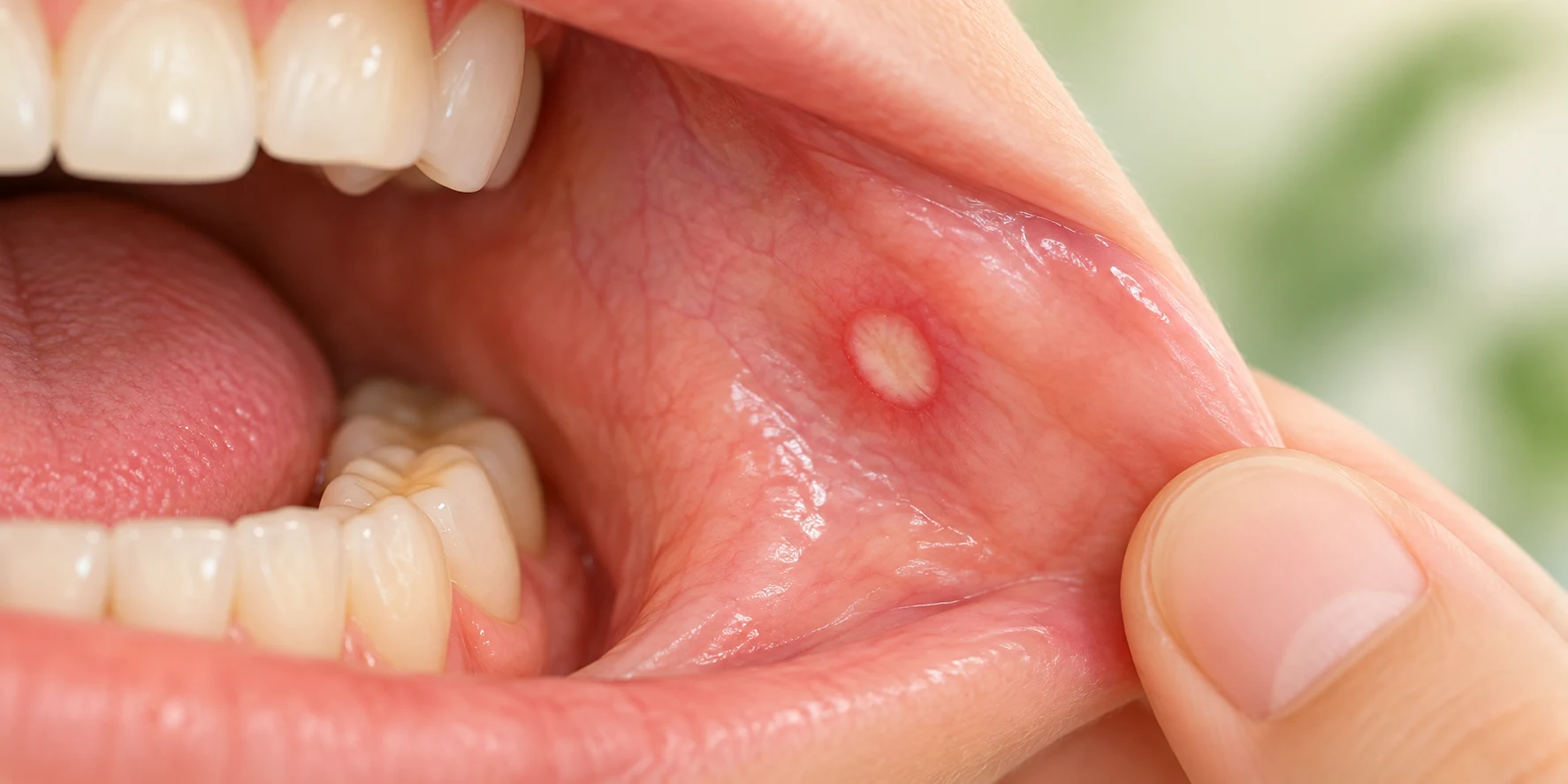
A mouth ulcer is a break in the lining of the mouth. A common type is an aphthous ulcer , also called a canker sore. It often looks round or oval with a white or yellow centre and a red border and may hurt while eating, drinking or talking. Aphthous ulcers occur inside the mouth and are not contagious . They are different from cold sores, which usually occur on or around the lips and are associated with herpes simplex virus. NIDCR Most minor aphthous ulcers heal without scarring in about one to two weeks.
What Causes Mouth Ulcers?
There is not always one identifiable cause. A single ulcer is often linked to local irritation, while recurrent ulcers can have several possible triggers. Common triggers include:
- Accidentally biting the cheek or lip
- A sharp tooth, rough filling, braces or poorly fitting denture
- Brushing too aggressively
- Hot, rough, spicy or acidic foods
- Emotional stress or tiredness
- Hormonal changes
- Some medicines
- Sensitivity to sodium lauryl sulfate in some toothpastes
- Low levels of iron, folate, vitamin B12 or zinc in some people
Frequent or severe ulcers can sometimes occur with conditions such as coeliac disease or inflammatory bowel disease. Recurrent ulcers do not automatically mean an underlying disease is present. NIDCR
What Do Mouth Ulcers Look and Feel Like?
Typical aphthous ulcers are painful sores inside the mouth. Some people notice tingling or burning shortly before the ulcer develops. Common features include:
- Round or oval shape
- White, yellow or greyish centre
- Red border
- Pain when eating or speaking
- One ulcer or several at the same time
Minor ulcers are the most common. Larger or deeper ulcers may be more painful and can take longer to heal. Mayo Clinic
How Are Mouth Ulcers Treated?
Most minor mouth ulcers do not need specific treatment and heal naturally. Treatment mainly aims to reduce pain and irritation while the tissue heals . Mayo Clinic At home, you can:
- Use a soft-bristled toothbrush
- Choose softer foods temporarily
- Avoid very spicy, salty, acidic, rough or very hot foods
- Rinse gently with warm salt water
- Keep the mouth clean without scrubbing the ulcer
- Avoid alcohol-containing mouthwash if it irritates the area
A pharmacist may recommend a suitable pain-relieving gel, spray or mouthwash. Persistent or severe ulcers may need prescription treatment or further investigation. nhs.uk
Can You Cure a Mouth Ulcer in One Day?
Usually, no . There is no reliable one-day cure for a typical aphthous ulcer. Pain may improve quickly with local treatment and by removing irritation, but the tissue still needs time to heal. Most uncomplicated canker sores resolve in approximately one to two weeks. NIDCR Be cautious with products or home remedies that promise to cure every mouth ulcer overnight.
Why Do Mouth Ulcers Keep Coming Back?
Recurring ulcers can be linked to repeated trauma, stress, certain foods, hormonal factors or individual susceptibility. In some people, nutritional deficiencies or medical conditions may contribute. Mayo Clinic If ulcers keep returning, a dentist or doctor may review diet, medicines and other symptoms. Blood tests or further evaluation may be considered when appropriate.
Mouth Ulcer or Mouth Cancer: When Should You Worry?
Most mouth ulcers are not cancer . The important warning sign is an ulcer that does not heal as expected. Arrange an examination if an ulcer:
- Lasts longer than three weeks
- Is unusually large or different from your usual ulcers
- Repeatedly bleeds
- Becomes progressively more painful
- Occurs with a persistent red or white patch
- Occurs with a lump in the mouth or neck
- Is associated with persistent difficulty swallowing
The NHS specifically advises having a mouth ulcer checked if it lasts longer than three weeks. A persistent ulcer does not automatically mean mouth cancer—many benign conditions can cause similar symptoms—but it should be examined so the cause can be identified. nhs.uk
When Should You See a Dentist for a Mouth Ulcer?
A dentist can assess ulcers, check for local irritation and decide whether treatment, monitoring or referral is appropriate. Book an assessment if:
- The ulcer lasts more than three weeks
- It keeps recurring
- It is unusually large or very painful
- Eating or drinking becomes difficult
- There is bleeding, increasing redness or swelling
- You notice a persistent lump or red/white patch
- A sharp tooth, denture or braces keep rubbing the area
If ulcers occur with fever, ulcers elsewhere on the body, joint problems or gastrointestinal symptoms, medical evaluation may also be appropriate. nhs.uk
Conclusion
Mouth ulcers are common and usually heal on their own within one to two weeks. Minor trauma, stress, irritation and several other factors can trigger them, while recurring ulcers sometimes need further investigation. The key is not to panic over a typical short-lived ulcer, but also not to ignore one that does not heal. A mouth ulcer lasting more than three weeks or accompanied by other persistent changes should be assessed by a dentist or doctor.
If a mouth ulcer is painful, keeps returning or is not healing normally, an oral examination can help identify irritation, dental causes or signs that need further investigation. Patients in Faridabad and Delhi NCR can contact Little Bites Dental Clinic for an assessment and appropriate next-step guidance.
Explore our oral health essentials, tooth pain guide, dentist-recommended toothpaste guide and professional teeth cleaning in Faridabad.