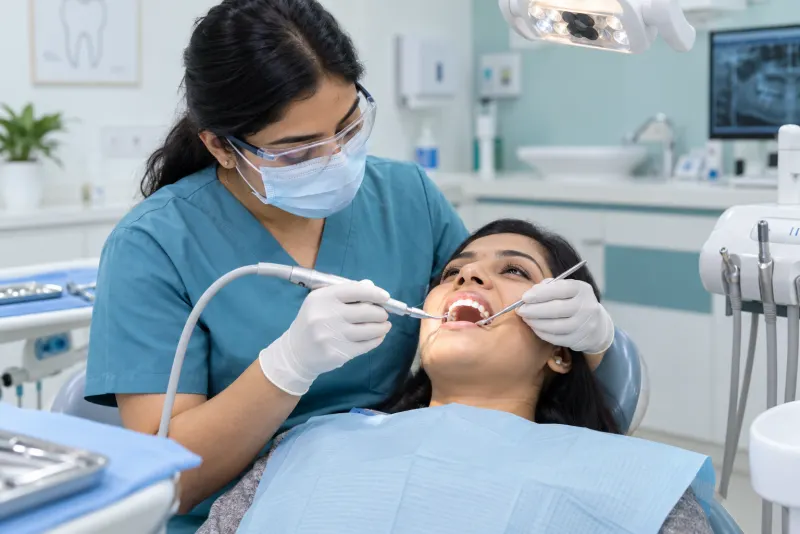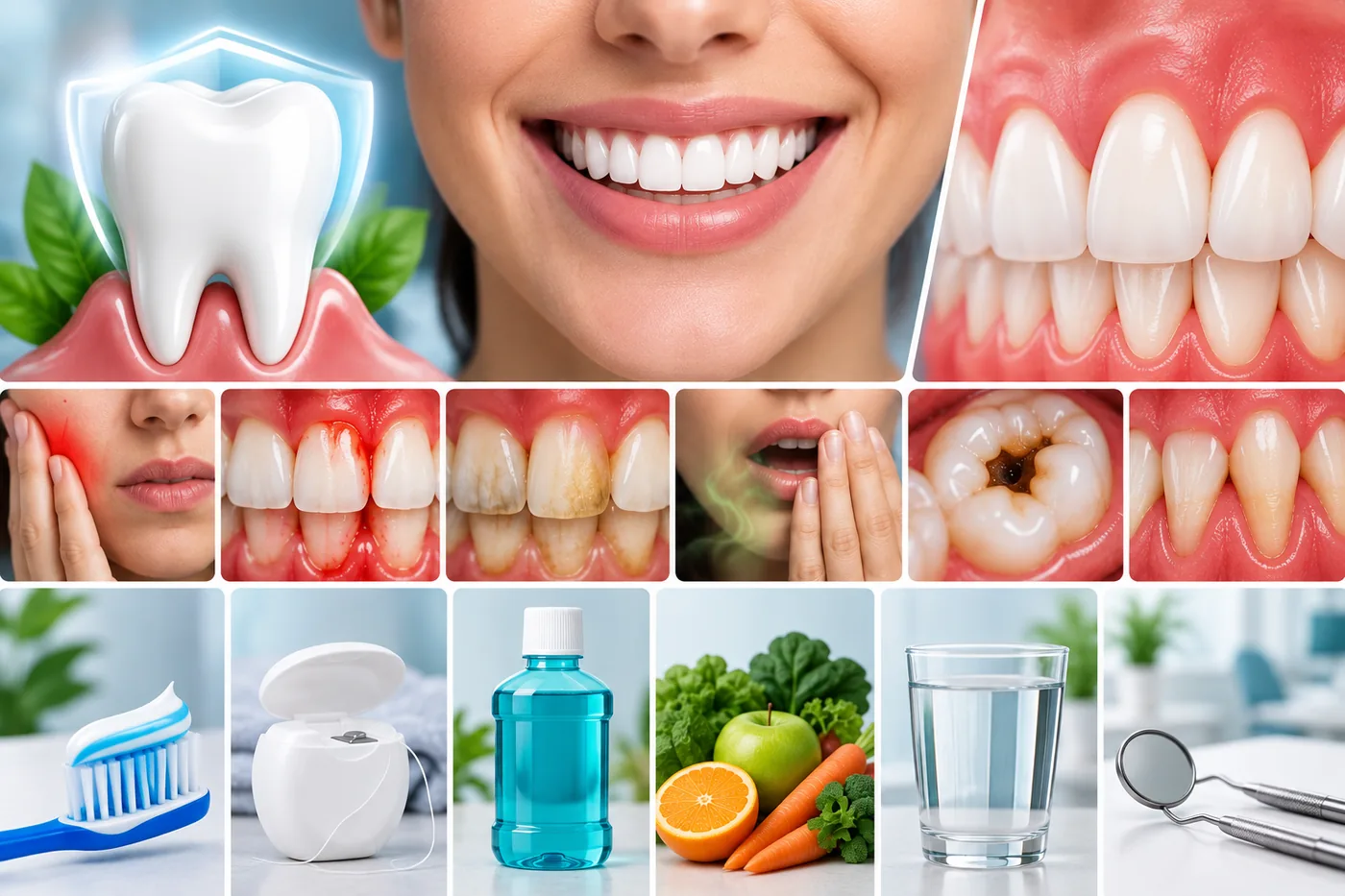
Oral health is more than having clean-looking teeth. It includes the health of your teeth, gums, tongue, mouth, supporting tissues, and other oral structures that help you eat, speak, smile, and live comfortably. Understanding oral health essentials — symptoms, types, and root causes — can help you recognise problems early and know when professional dental care may be needed.
At Little Bites Dental Clinic in Faridabad, patients of different ages may have very different oral-health needs. Children may be more vulnerable to tooth decay, adults may develop gum problems, and older adults may experience issues such as dry mouth, exposed roots, or tooth loss.
What Is Oral Health?
The World Health Organization describes oral health as the condition of the mouth, teeth, and orofacial structures that allows essential functions such as eating, speaking, and breathing while also contributing to comfort, confidence, and social well-being.
That means oral health includes much more than whether someone has cavities.
A healthy mouth generally involves comfortable teeth, gums that do not repeatedly bleed or swell, adequate saliva, functional chewing, and an absence of persistent pain, swelling, ulcers, or other concerning changes.
Worldwide, oral diseases remain extremely common. WHO identifies dental caries, periodontal disease, tooth loss, and oral cancers among the major oral conditions.
What Are the Most Common Types of Oral Health Problems?
Some oral conditions are temporary and relatively minor, while others require professional diagnosis and treatment.
Common oral health problems include:
- Dental caries (tooth decay): Damage to tooth structure caused when bacteria in dental plaque metabolise sugars and produce acids that attack enamel.
- Gingivitis: Early inflammation of the gums, which may cause redness, swelling, or bleeding.
- Periodontitis: A more advanced form of gum disease affecting the tissues and bone supporting the teeth.
- Tooth sensitivity: Short, sharp discomfort triggered by cold, heat, sweets, or touch. Several different dental conditions can cause sensitivity.
- Dental infections: Infection may develop when decay, trauma, or another problem allows bacteria to reach deeper tissues.
- Dry mouth (xerostomia): Reduced saliva can increase difficulty with eating or speaking and may increase the risk of decay and oral infections.
- Tooth wear or erosion: Loss of tooth structure may occur because of acids, grinding, or other mechanical factors.
- Oral ulcers and soft-tissue lesions: Many are temporary, but persistent or unusual lesions require professional evaluation.
- Tooth loss: Tooth loss may result from advanced decay, severe periodontal disease, trauma, or other causes.
- Oral and oropharyngeal cancers: Persistent ulcers, lumps, abnormal patches, or unexplained changes in the mouth should not be ignored.
WHO identifies dental caries and periodontal disease among the most prevalent oral conditions internationally.
What Symptoms Can Indicate an Oral Health Problem?
Oral disease does not always produce severe pain in its early stages. A cavity, for example, may initially cause few noticeable symptoms. Gum disease can also progress gradually.
Signs worth paying attention to include toothache, sensitivity that persists or worsens, bleeding or swollen gums, persistent bad breath, gum recession, pain while chewing, a loose permanent tooth, facial or gum swelling, dry mouth, difficulty opening the mouth, or changes in how the teeth meet.
A mouth ulcer, lump, red or white patch, unexplained bleeding, or other oral change that does not resolve should also be assessed rather than repeatedly self-treated.
What Are the Root Causes of Poor Oral Health?
There is rarely one universal cause of poor oral health. Different diseases have different mechanisms and risk factors.
Dental Plaque and Bacteria
Plaque is a sticky microbial biofilm that continuously forms on teeth. When plaque is not adequately disrupted through brushing and interdental cleaning, it contributes to tooth decay and gum inflammation.
If plaque hardens into calculus or tartar, professional cleaning is generally needed to remove it. NIDCR explains that plaque and tartar can trigger inflammation that damages gum tissues and the supporting structures around teeth.
Frequent Sugar Exposure
Tooth decay develops when bacteria interact with sugars and other fermentable carbohydrates and produce acids. Repeated acid attacks can gradually remove minerals from enamel and eventually produce a cavity.
The frequency of sugary foods and drinks matters, not simply whether someone eats sugar at all. WHO identifies free-sugar consumption as a major modifiable risk factor for dental caries.
Inadequate Fluoride Exposure
Fluoride helps make teeth more resistant to mineral loss and supports remineralisation. Insufficient fluoride exposure can therefore increase susceptibility to tooth decay.
For most people, brushing with fluoride toothpaste is an important part of preventive oral care. If you are unsure which product suits your needs, this dentist-recommended toothpaste guide explains which ingredients matter and which marketing claims to ignore.
Tobacco, Areca Nut, and Alcohol
Tobacco use increases the risk of periodontal disease and several other oral problems. Tobacco, alcohol, and areca nut or betel-quid use are also important risk factors for oral cancer.
Dry Mouth
Saliva helps lubricate the mouth, clear food particles, support swallowing, and protect the teeth. Persistent dry mouth can result from medicines, certain diseases, cancer treatment, or other causes. Because saliva protects the oral environment, reduced saliva can increase the risk of tooth decay and oral infection.
Medical Conditions and Medicines
Oral and general health can influence each other. For example, diabetes is associated with periodontal disease and dry mouth, although these relationships can be complex and should not be simplified into claims that one condition always directly causes another.
Some medicines can also contribute to dry mouth or other oral changes.
Delayed Dental Care
Waiting until dental pain becomes severe can allow an otherwise manageable condition to progress. Preventive examinations may identify decay, gum inflammation, tooth wear, or other changes before they become more complicated.
What Are the Five Basics of Good Oral Health?
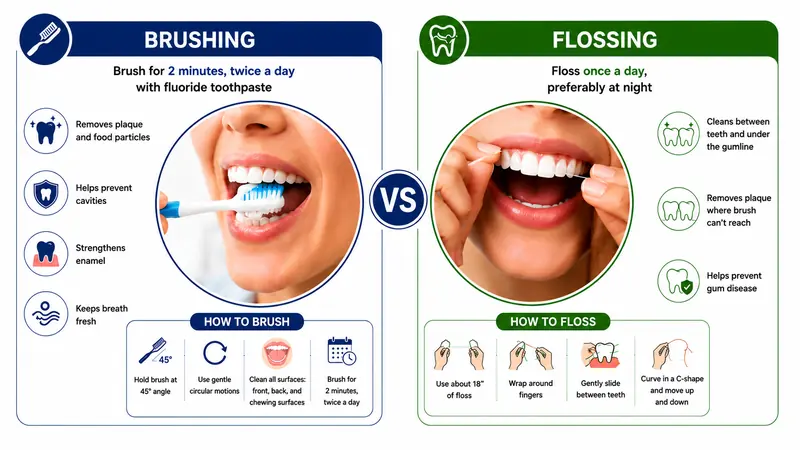
For most people, the fundamentals are straightforward: brush twice daily with fluoride toothpaste, clean between the teeth every day, limit frequent sugary foods and drinks, avoid tobacco, and attend dental examinations at intervals appropriate for your individual risk.
The American Dental Association similarly recommends twice-daily brushing with fluoride toothpaste, daily interdental cleaning, limiting sugar as part of a healthy diet, and regular professional dental care. Routine teeth cleaning and preventive dental care helps remove hardened deposits that brushing alone cannot reach.
If you are reviewing your daily routine, this electric toothbrush guide covers dentist-recommended features for beginners, children, and people with a higher cavity risk.
Children, people with braces, pregnant patients, people with diabetes, older adults, and individuals with dry mouth or a history of extensive dental disease may require more personalised preventive advice.
How Often Should You See a Dentist?
There is no single examination schedule that is ideal for every person.
Someone with active decay, gum disease, orthodontic appliances, dry mouth, or other risk factors may need closer monitoring than a person with stable oral health. Your dentist can recommend an interval after assessing your teeth, gums, medical history, habits, and previous dental problems.
This risk-based approach is more appropriate than waiting for pain before arranging an appointment.
Oral Health at Different Stages of Life
Children need supervision while developing effective brushing habits and benefit from early prevention of tooth decay. Preparing well for a first dental visit can also make later appointments easier for both child and parent.
Teenagers may need additional attention during orthodontic treatment or when dietary habits change.
Adults may face decay, periodontal disease, sensitivity, tooth wear, and lifestyle-related risks. Older adults can experience receding gums, exposed root surfaces, reduced manual dexterity, multiple medicines, and dry mouth, all of which can make oral care more challenging.
Oral healthcare should therefore change with the patient rather than following the same routine throughout life. You can read more about age-appropriate care in our guide to pediatric dentistry in Faridabad.
When Should You See a Dentist?
Arrange a dental assessment if you develop persistent tooth pain, repeated sensitivity, bleeding gums, gum swelling, loose teeth, persistent bad breath, broken teeth, difficulty chewing, recurrent swelling, or an unexplained change inside the mouth. If pain is already severe, our tooth pain guide explains safe interim steps and the warning signs that need urgent care.
A dentist can determine whether the problem needs treatment, monitoring, improved preventive care, or referral for further evaluation.
For patients and families in Faridabad and Delhi NCR, an oral-health assessment at Little Bites Dental Clinic can help identify individual risk factors and establish an appropriate preventive or treatment plan.
Conclusion
Understanding oral health essentials — symptoms, types, and root causes — can help you recognise changes before they develop into more complicated problems. Tooth decay, gum disease, dry mouth, infections, and other oral conditions have different causes, so treatment should be based on diagnosis rather than symptoms alone.
Daily plaque control, fluoride toothpaste, sensible sugar intake, avoiding tobacco and areca nut, and appropriate dental examinations form the foundation of long-term oral health.
If you have persistent tooth sensitivity, bleeding gums, dental pain, dry mouth, or another change that concerns you, a dental examination can help identify the underlying cause and determine whether treatment, monitoring, or preventive care is appropriate. Patients in Faridabad and Delhi NCR can contact Little Bites Dental Clinic for an individual dental assessment.
References
- World Health Organization – Oral Health Fact Sheet
- World Health Organization – Oral Health Overview
- World Health Organization – Sugars and Dental Caries Technical Note
- American Dental Association – Oral Health Topics
- National Institute of Dental and Craniofacial Research – Tooth Decay
- National Institute of Dental and Craniofacial Research – Dry Mouth
Author / Medical Reviewer: Dr. Nikitaa Dhingra Sanan
Clinic: Little Bites Dental Clinic, Faridabad
Medical disclaimer: This article provides general educational information and does not replace an individual dental or medical consultation. Always follow the advice of your treating dentist or physician.